

B. Prabha painted the harsh reality of life for many indian women
In 1933, in the small village of Bela near Nagpur in Maharashtra, B. Prabha was born into a country still under British rule. Art was not considered a profession for women. Most girls were expected to grow into the steady rhythm of domestic life. Yet Prabha carried with her a different kind of attention. She watched how the women around her worked, endured, and moved through the world with a kind of silent strength and became inspired by it.
India itself was changing. When Prabha was fourteen, the nation achieved independence during the Indian Independence Act 1947, ending nearly two centuries of British colonial rule. Independence arrived with both celebration and sorrow. The Partition of India divided the country and displaced millions of people across new borders. A few years later, in 1950, the newly formed nation adopted the Constitution of India, establishing a democratic republic that granted voting rights to both men and women. The country was learning how to define itself and young artists like Prabha were doing the same.
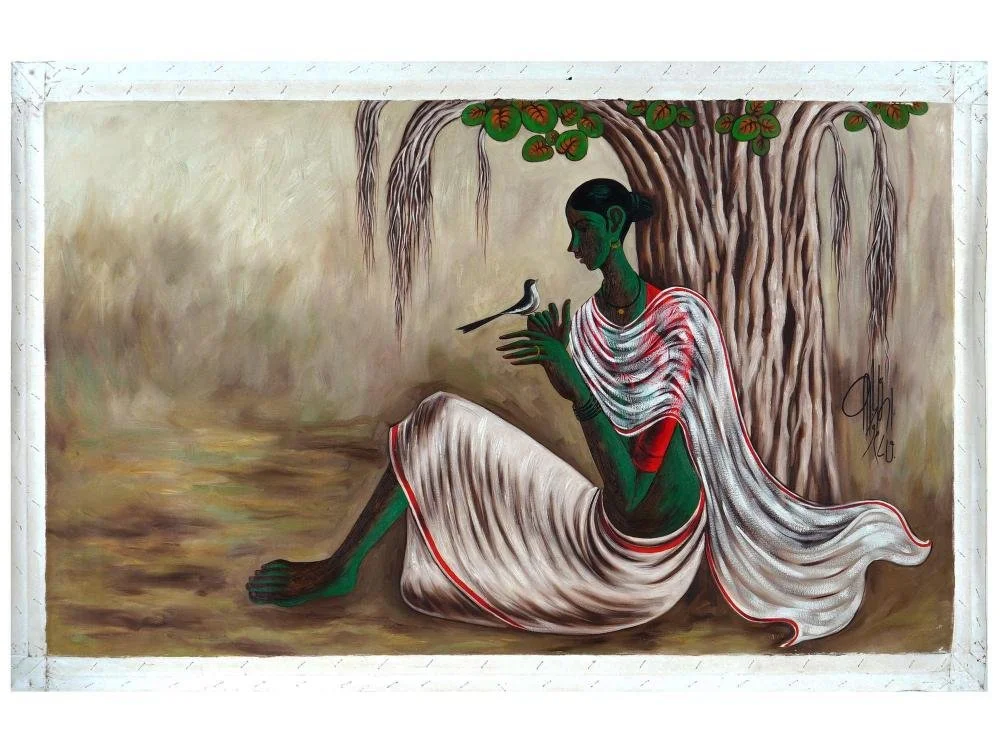
She first studied at the Nagpur School of Art before moving to Bombay to attend the renowned Sir J. J. School of Art, where she earned a diploma in Painting and Mural Painting in 1955. Bombay was a hard city for young artists with little money. In 1956, she married the sculptor B. Vithal, and the two struggled together through the early years. They sold jewelry when funds ran thin and leaned on friends when times grew difficult. Yet even in those uncertain years, her talent was becoming clear.
While she was still a student, three of her paintings were purchased by the nuclear physicist Homi J. Bhabha for the Tata Institute of Fundamental Research. The gesture quietly launched her career. Soon afterward, she won First Prize at the 1958 Bombay State Art Exhibition and received an award from the All India Fine Arts and Crafts Society in New Delhi.
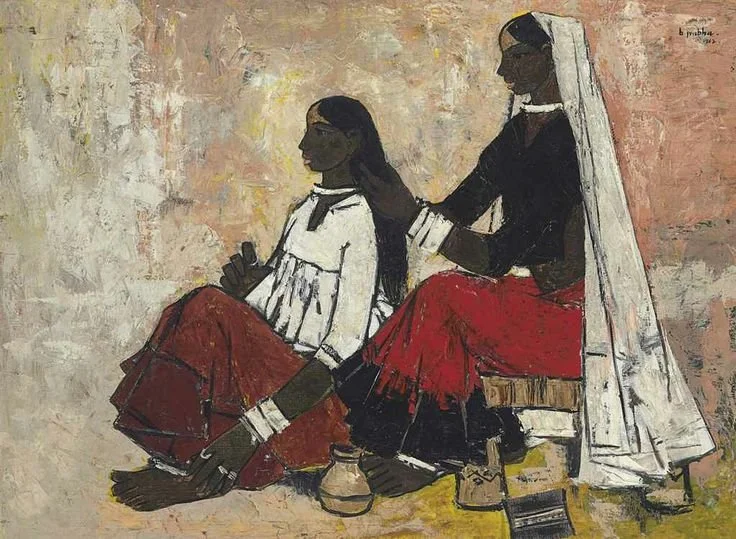
Prabha experimented widely in her early years with abstract work, watercolor, gouache, and acrylic. But by the mid-1960s, she settled into oil on canvas. What emerged from those canvases became hers unmistakably. She painted elongated, contemplative women, often rural or tribal figures, set against fields of deep color. These women were not decorative subjects. They carried the quiet weight of labor, hunger, drought, and survival.
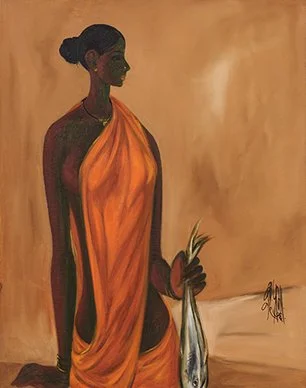
Inspired in part by the pioneering modernist Amrita Sher-Gil, Prabha set out to do something deliberate. She once said she wanted to paint the trauma and tragedy of women. Her figures were tall, solemn, often alone, and reflected that purpose.
Over the course of her life, she exhibited widely, holding more than fifty solo and group exhibitions in India and abroad, including early shows at Kumar Gallery. Her work entered major collections such as the National Gallery of Modern Art, the Air India Collection, the Tata Institute of Fundamental Research, and later the Rubin Museum of Art.
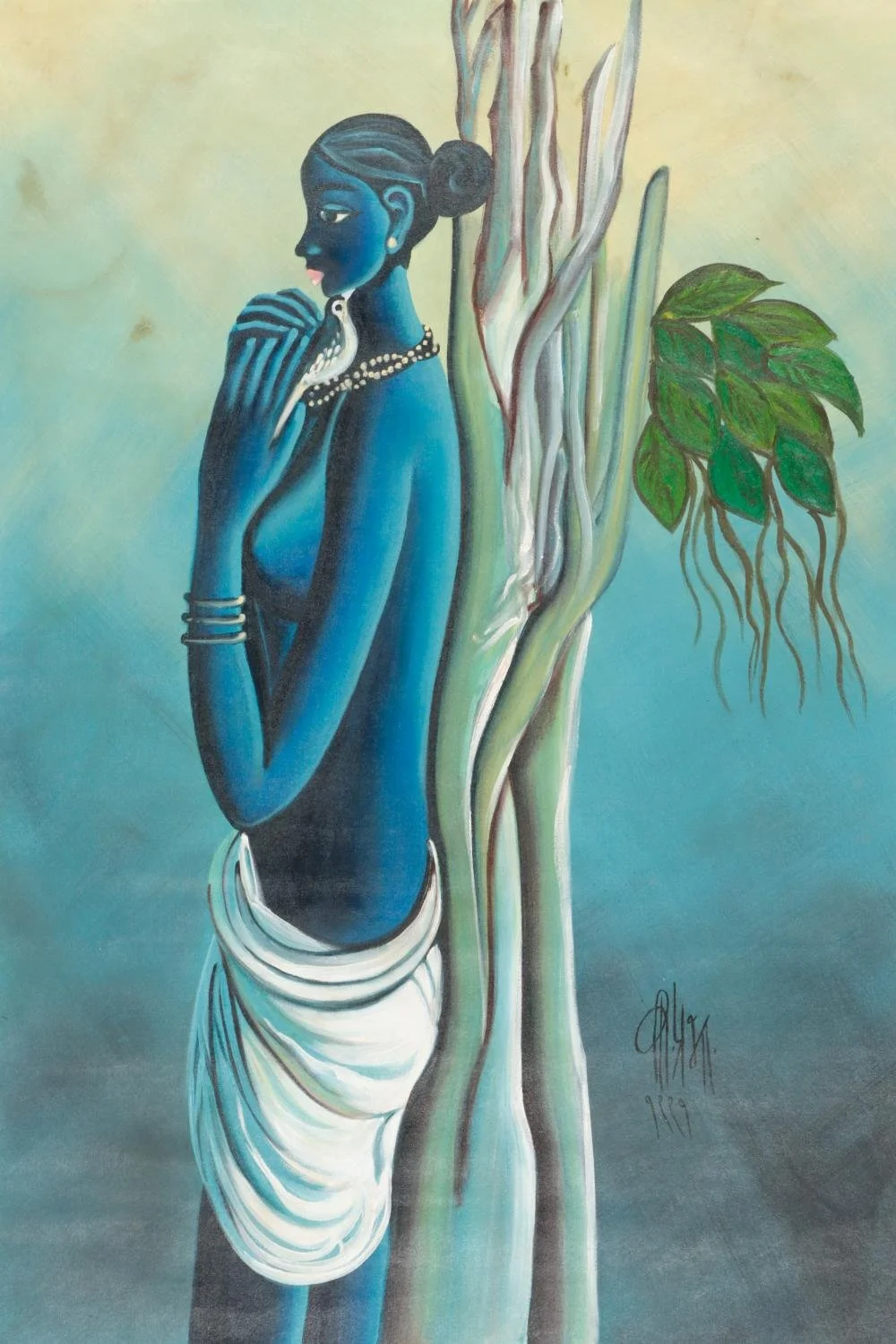
When B. Prabha died in 2001, she left behind a body of work that quietly insists on being seen. The women she painted still stand on her canvases, tall, thoughtful, and enduring like witnesses to the long labor of living.